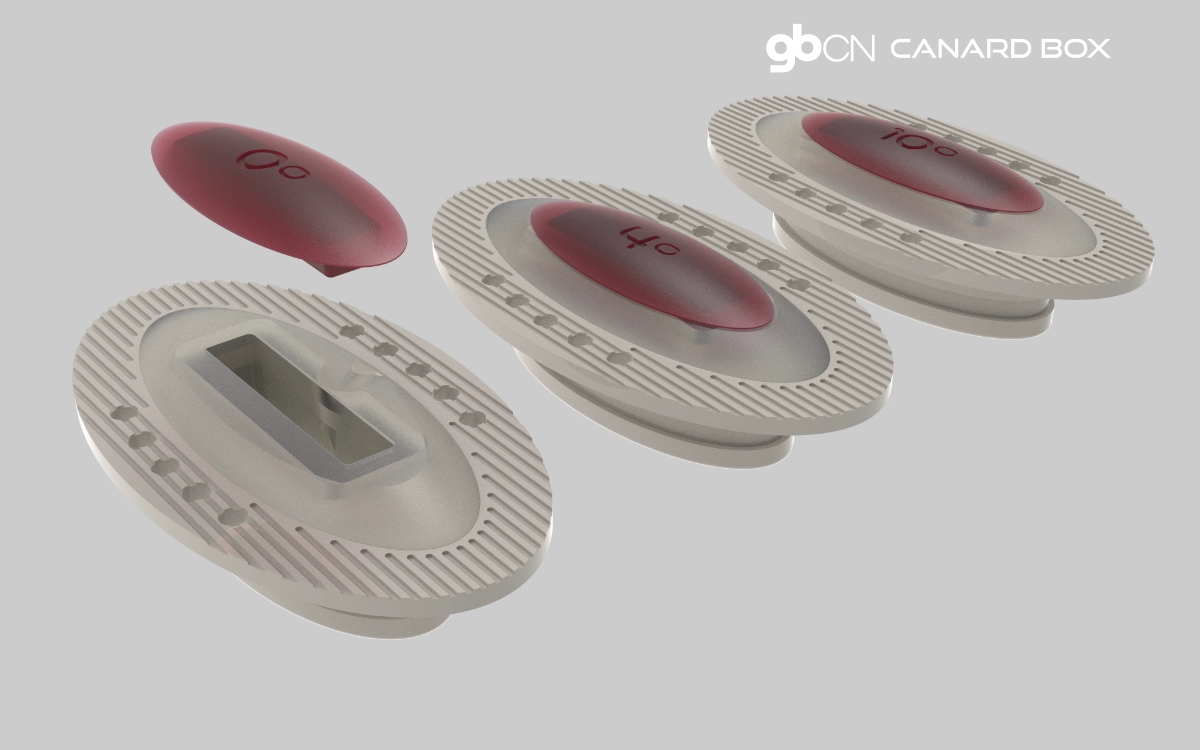
We have been getting a lot of requests for the canard box we designed some time ago. So we have revisited the design to see if it can be improved and to determine if there was a way of producing limited runs.
The ideas we have come up with are exciting and will give us a lot of flexibility in producing these boxes without the need for expensive tooling. If at some point the demand grows beyond our limited production capabilities, we can always get molds made.
GBCN Range
Sometime back, we designed a canard box to complement the GB24 (now GBOX). Due to the renewed interest in twinzers, the idea was to have a complete offering for producing them with our system.
As part of this effort, we needed to come up with a way of producing the box that would give us flexibility in the manufacturing process without the need for expensive tooling. Plus, we were determined to make the box as strong as possible. It also needed to provide greater flexibility in terms of the supported cant angles. Initially, the design called for three angles: 0º, 4º, and 10º. However, with the new design it is possible for us to produce these boxes with any cant angle between zero and ten.
We think we have achieved all of the goals we set for these boxes and are moving forward to the next phase, which will be manufacturing an initial batch and then testing them.
GBCN Construction
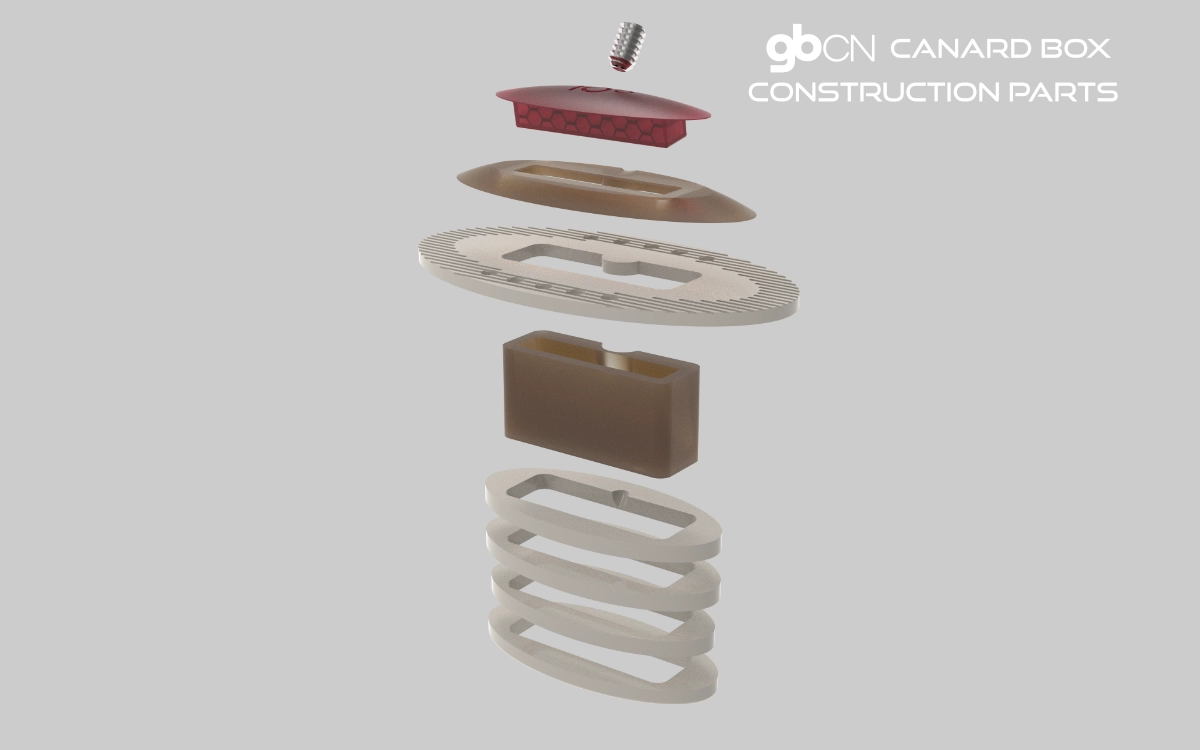
The design of the box features a unique construction method; there is nothing else like this on the market. It gives us a lot of freedom for experimentation and manufacturing.
The construction method employs a hybrid construction that is a combination of 3D printing and CNC machining. The dam, core, and slot plug are all 3D printed utilizing UV-cured resin. For the slot plug, it is printed with a high-strength but flexible resin that allows the part to fit tightly in the slot. These parts are then coupled with CNC-machined G10 or phenolic parts that add incredible strength to the box, without large weight penalties. The flange is solid G10 and is designed to support the thread tapping for the set screw.
The 3D printed parts might eventually be color-coded to the standard cant angles, but initially the cant angles will be embossed on the top of the slot plug and the bottom of the core.
GBCN Slot Plug
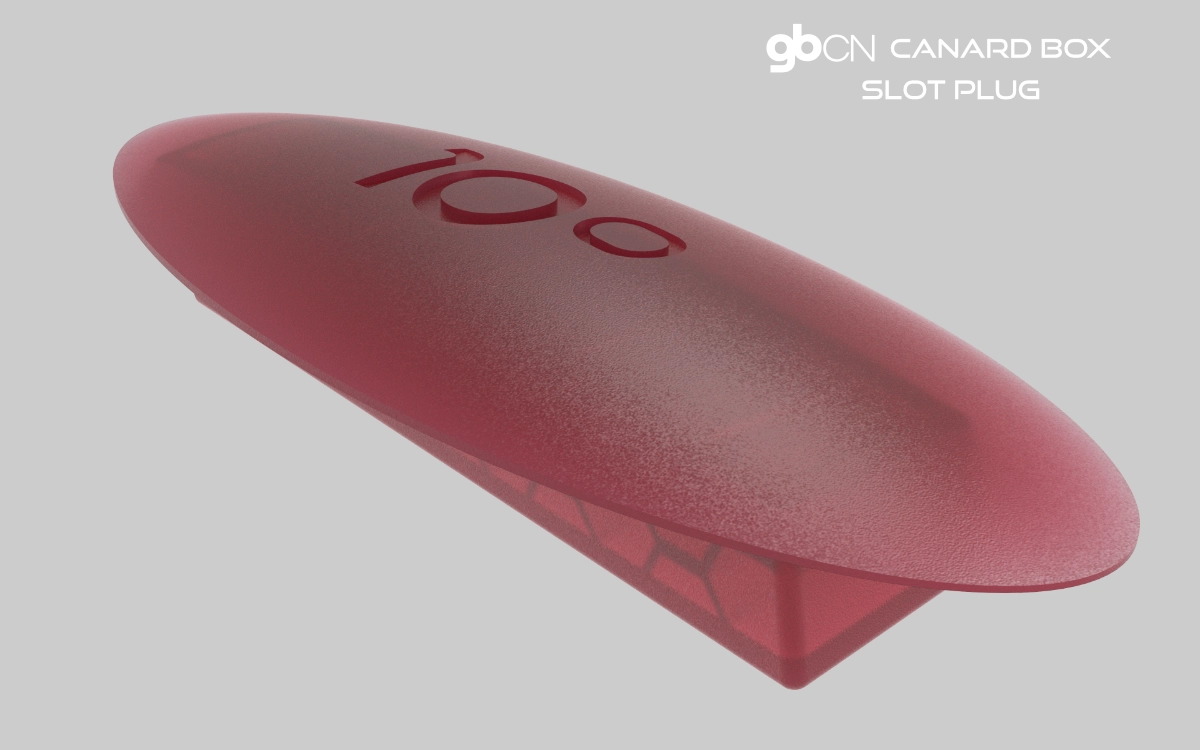
The slot plug is another unique feature of the GBCN box. As the name suggests, it is used to plug the slot when laminating over the box, so you don't have to use masking tape. The plug is made of a flexible material that is similar to TPU, which lets it fit tightly in the slot and keep resin from getting in. The material also makes it easier to separate the resin from the plug because it doesn't stick well.
The plug is meant to be used more than once. When the glass kicks, just cut around the edge and take the plug out. Using the plug also means you don't have to use the trim spacer to trim the dam with the router.
The cant angle is embossed on the top surface of the plug to make it easier to identify the angle.
GBCN Layout Guide
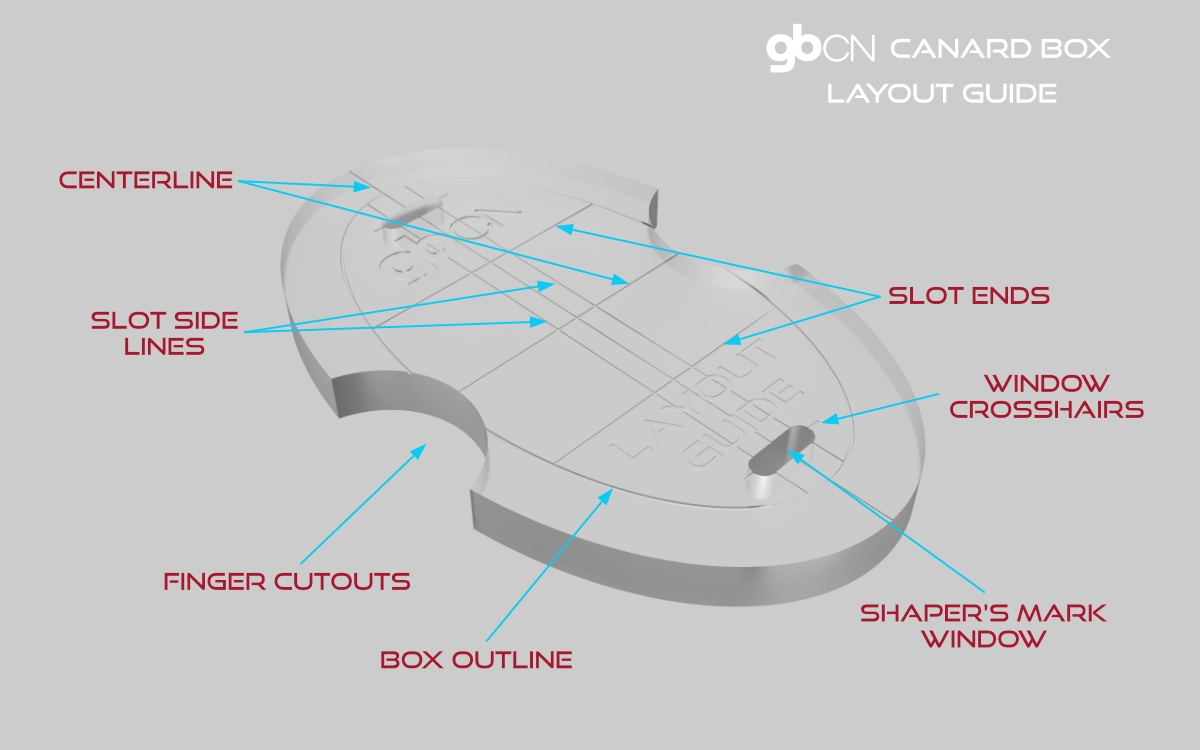
The layout guide is utilized to position the router jig on the shaper's marks. It features a series of lines and markings on the upper surface that represent the outline of the box and the centerline and inside faces of the slot. Additionally, there are two small "windows" that make it easier to align the guide with the marks on the surfboard.
When positioning the guide, the inner line is used to position side boxes, and the centerline is used for center boxes.
The guide is placed inside the inner cavity of the GBCN router jig insert. The jig is then moved around until it is correctly positioned on the marks. Two finger holes in the guide allow it to be lifted out without disturbing the jig.
NOTE: If you are employing double-sided tape to anchor the jig to the board, you will need to slightly elevate the jig while positioning it so as to not have the tape stick to the board.
Features of the guide.
- Centerline This represents the center of the guide and is used to place center boxes.
- Side Lines These represent the inside faces of the box slot. The line closest to the stringer of the board is used to lace side boxes.
- Slot Ends These two lines define where the ends of the slot would be located after installation.
- Shaper's Windows The viewports are used to facilitate positioning the guide on the marks by lining them up in the window using the crosshairs.
- Window Crosshairs These are lines that define the center of the shaper's windows and are used to position the mark accurately within the window.
- Finger Holes There are fingerholes on either side of the guide to facilitate placing and removing the guide within the jig.
- Box Outline An outline of the box is engraved around the perimeter of the guide to help visualize where the box will be placed after installation.
GBCN Jig Insert
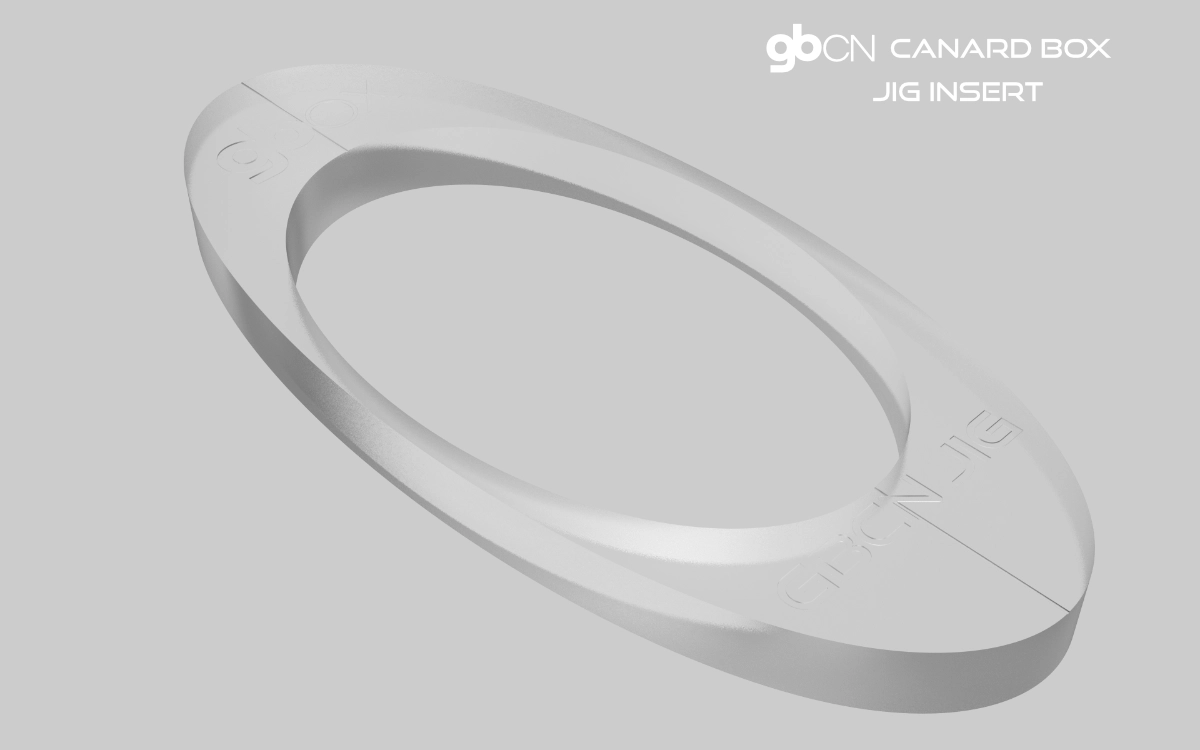
To rout the cavity for a canard box, the existing GBOX router jig is utilized by adding in an insert that adjusts the jig to suit the shape of the box. The layout guide fits inside this insert to assist in the placement of the jig.
GBCN Installation
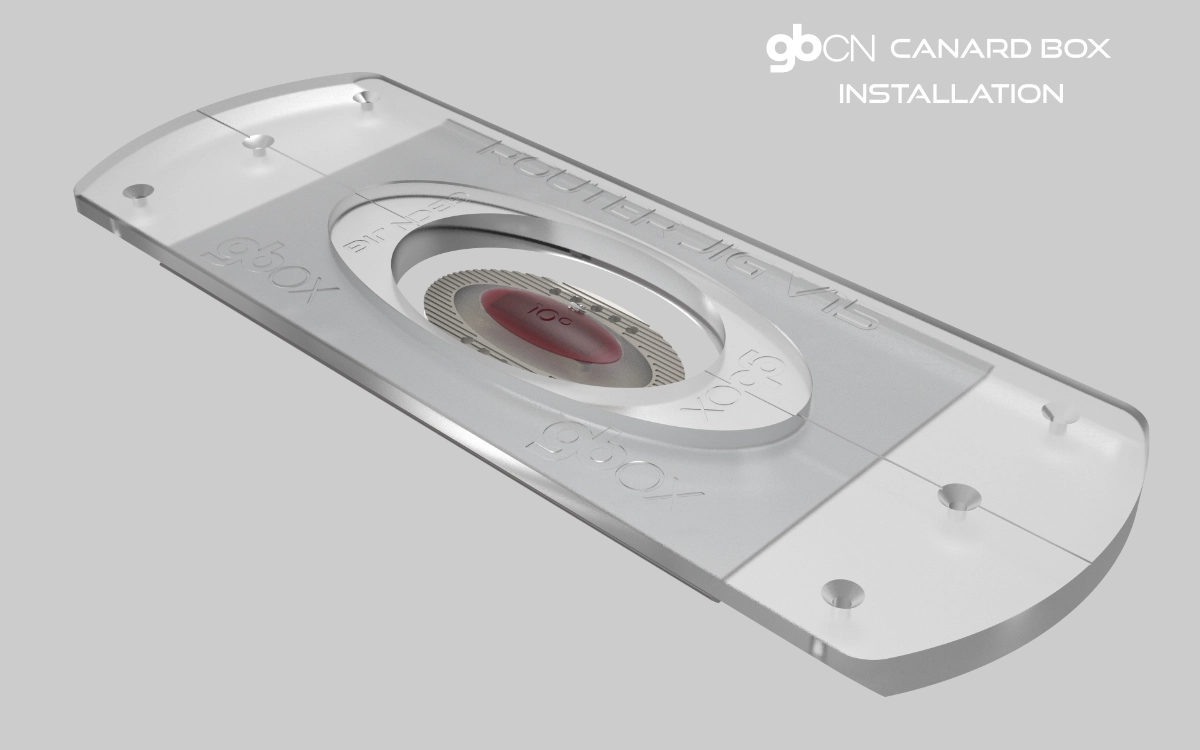
The installation process for the canard box is identical to the one used for the regular boxes. All the steps are the same. The only difference is the introduction of the canard jig insert and the canard layout guide.
The only difference between the two processes is that with the canard box, the trim spacer step is not required because of the removable slot plug.